
Questions about moving
01
Estimates and booking
How a quote is produced, and what happens between the estimate and your move date.
How do you work out an estimate?
A move coordinator goes through your inventory with you — by phone, video walkthrough or in person — room by room, including the garage, closets and anything going into storage. The estimate is based on what you actually own and the access at both addresses, then confirmed in writing before you commit.
Why do you need to see the whole home?
Because the two things that decide a move are volume and access. A two-bedroom apartment on the ground floor with a loading zone and a two-bedroom on the fourth floor with a single elevator and a long carry are different jobs, and pretending otherwise is how move-day surprises happen.
What if my inventory changes after the estimate?
Tell us as soon as you know. Adding a room of furniture, a piano or a storage unit changes the crew size and the truck, so it is better to revise the estimate than to discover it on the morning of the move.
Do I have to book far in advance?
1–2 weeks in advance is recommended; around weekends, month-end, summer and peak moving periods, 2–4 weeks. Same-day and short-notice moves can be accommodated based on availability. If your dates are still moving, we would rather hold a provisional date and firm it up than have you guess.
02
Packing and protection
What gets wrapped, what you can pack yourself, and how your home is protected.
Can I pack some of it myself?
Yes, and most people do. You can pack everything, have us pack the whole home, or split it — the common split is that we handle the kitchen, glassware, artwork and electronics, and you handle clothes, books and linens.
How does a packing day work?
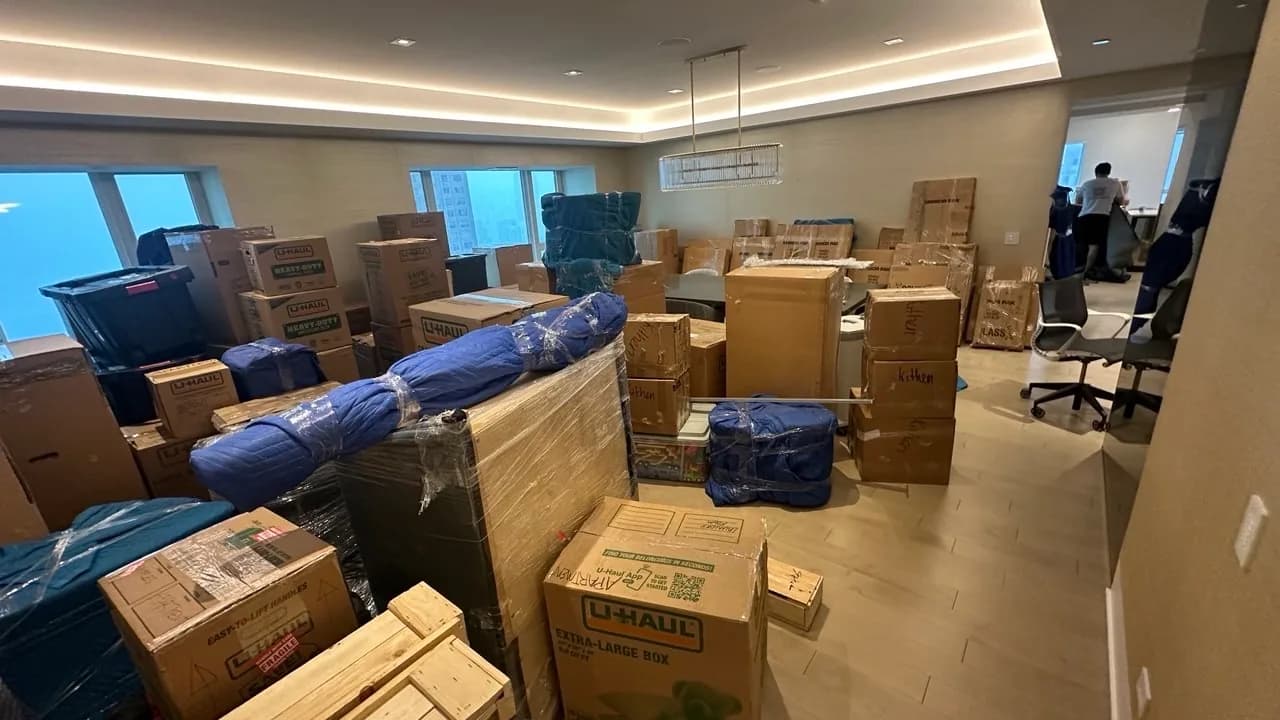
For anything more than a small apartment, packing happens the day before the move rather than the same morning. Items are packed by room, boxes are labelled with the room they belong to at the destination, and fragile cartons are marked so the crew loads them accordingly.
What protects the house itself?
Floor runners go down and door jambs and bannisters are padded before anything is carried. Furniture is blanket-wrapped and stretch-wrapped in the room it came from rather than in the driveway, so it is protected for the whole carry.
Do you take furniture apart?
Yes — beds, table legs, sectional sofas, and anything else that will not clear a doorway or a stair turn. Hardware is bagged and kept with the piece, and whatever we disassemble we reassemble at the other end.
What happens to hanging clothes and mattresses?
Hanging clothes go into wardrobe cartons so they arrive on their hangers, and mattresses go into mattress bags. Neither should travel loose.
03
What we cannot move
Standard non-allowable items for household goods carriers, plus the things you should keep with you.
What can't go on the truck?
Hazardous materials cannot be transported: propane tanks, gasoline and other fuels, oxygen and pressurised cylinders, aerosols, paint and paint thinner, charcoal, lighter fluid, fireworks, ammunition, pool chemicals, cleaning solvents, batteries that are leaking, and anything else flammable, corrosive or explosive. Please empty fuel from lawn equipment before move day.
What about food, plants and pets?
Perishable food, open containers and refrigerated items should not be loaded. Houseplants generally do not survive time in a truck and are usually best moved in your own vehicle. Pets travel with you, never in the truck.
What should I keep with me instead?
Carry irreplaceable and high-risk items yourself: passports and identification, deeds and financial records, medication, jewellery, cash, house and car keys, laptops, external drives, and anything of sentimental value that cannot be replaced. If it would ruin your week to lose it, it should not be on any truck.
04
Move day and delivery
What the crew does, and what is expected of you.
What happens when the crew arrives?
The crew walks the home with you first, confirms what is going and what is staying, notes anything requiring special handling, and lays protection before touching your furniture. Then they wrap, disassemble what needs it, and load.
My building requires a certificate of insurance. Can you provide one?
Yes. Send us the requirements from your building or association and we produce the certificate before move day. Many managed buildings also require a reserved service elevator and a fixed move window, which we arrange with management as part of the booking.
Will boxes go to the right rooms?
Yes — that is what the labelling is for. Boxes are delivered to the room on the label and furniture is reassembled and placed where you want it before the crew finishes, rather than stacked in the garage for you to sort out.
How do I check nothing is missing?
Your shipment is inventoried as it is loaded, and at delivery you check items back against that same list before the crew signs off. Raise anything that looks wrong while the crew is still there.
More specific
Questions about a particular service
Each service page answers the questions specific to that kind of move.
Still have a question?
Ask a coordinator directly — they will walk your inventory with you and answer it against your actual move rather than in general terms.